
Gold and silver markets are at an important turning point. Prices have risen sharply in recent w
 eeks, but are now taking a small pause. For investors, this is not necessarily a negative sign—it simply means the market is taking time to adjust before its next move.
Currently, gold is trading around $4,816 per ounce, while silver is close to $81. The slight dip in prices is mainly due to two factors: a stronger US dollar and rising crude oil prices.
Let’s understand this in a simple way.
When the US dollar becomes stronger, gold and silver tend to become more expensive for global investors, since they are priced in dollars. This reduces demand in the short term, leading to a slight fall in prices.
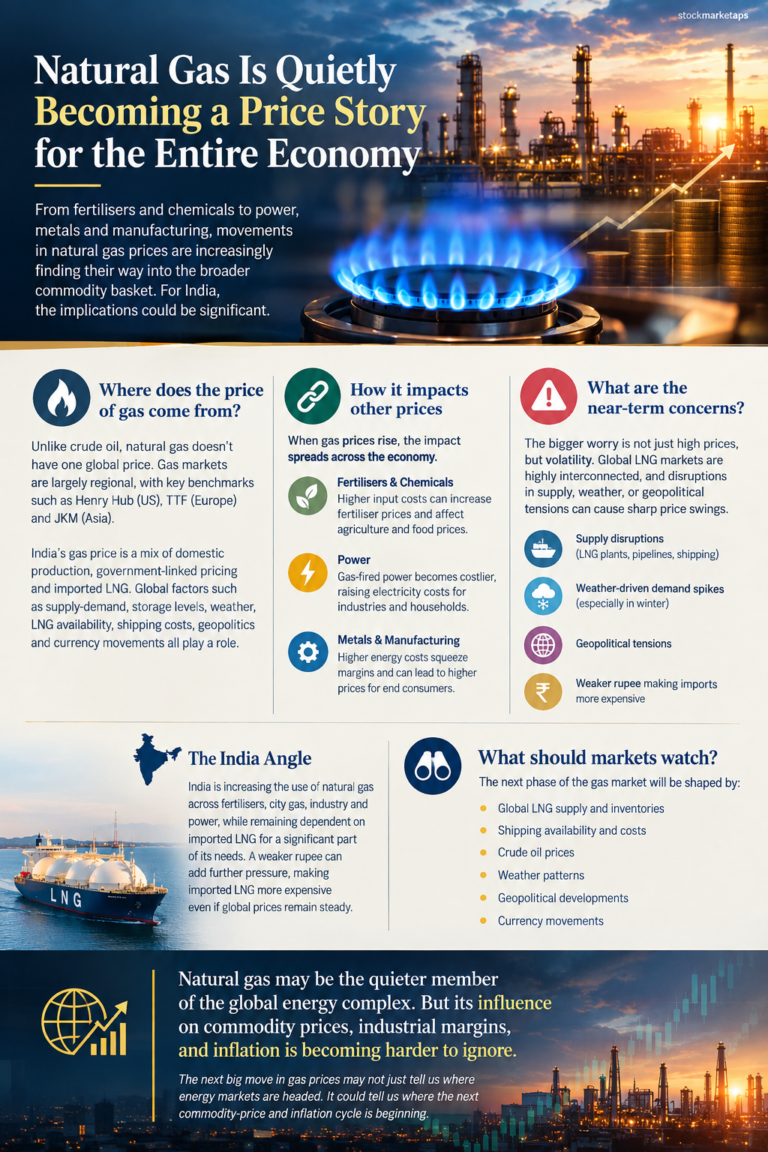
At the same time, crude oil prices have jumped significantly, with Brent crude nearing $97.5 per barrel and WTI crossing $91. This increase is largely due to geopolitical tensions, especially around the Strait of Hormuz, a key global oil route.
Now, rising oil prices usually lead to higher inflation. And when inflation rises, central banks may keep interest rates high for a longer period. This creates a challenge for gold and silver.
Why?
Because gold and silver do not give any regular income like interest or dividends. When interest rates are high, investors may prefer fixed-income options instead. This is why, in the short term, gold and silver prices can come under pressure.
However, this is only part of the story.
From a long-term perspective, gold and silver are still considered strong investment options. They act as a hedge against inflation and provide safety during uncertain times. And right now, global uncertainty is still very much present—whether it is geopolitical tensions, inflation concerns, or economic slowdown risks.
So, what we are seeing now is not a decline, but a temporary pause after a strong rally.
For investors, this phase is important. Instead of reacting to short-term price movements, the focus should be on the bigger picture. Markets often move in cycles—rising, pausing, and then moving again.
Looking ahead, key economic data—especially inflation numbers and central bank decisions—will play a major role in deciding the next direction. If inflation remains high and interest rates do not rise further, gold and silver could resume their upward trend.
In such a scenario, gold moving towards $5,000 and silver approaching $85 is not unrealistic.
The key takeaway for investors is simple:
Do not panic during short-term corrections. These phases often provide opportunities to invest gradually.
In summary, gold and silver are not weakening—they are simply stabilizing at higher levels. The next few weeks will be crucial, and disciplined, long-term investors are likely to benefit the most from this phase